Vintage Handmade: A Warm, Timeless Script Font for Makers
There’s that quiet moment—early morning light on my desk, coffee steaming beside a stack of kraft labels and a half-finished candle collection—when I open my design software and scroll past dozens of script fonts. Then I find it again: Vintage Handmade. Not flashy, not overly ornate—but instantly familiar, like handwriting from a beloved aunt’s recipe card or the soft ink of a handwritten note tucked into a gift box. That’s when the design clicks. The label feels *right*. Authentic. Thoughtful.
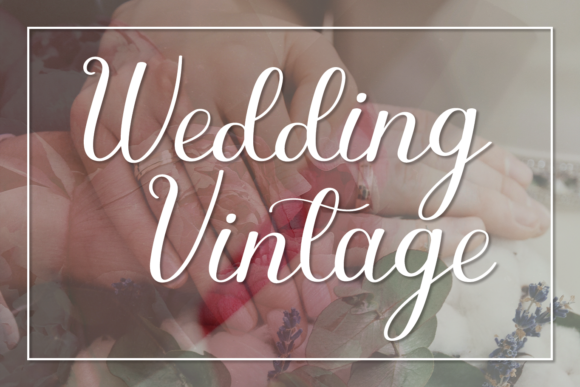
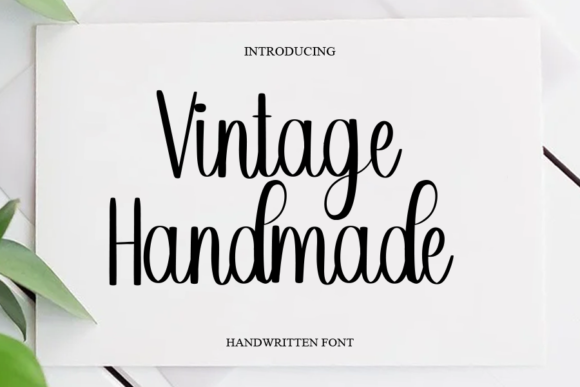
Vintage Handmade is a true Script Handwritten typeface—fluid, organic, and full of gentle imperfections that make each letter feel hand-drawn. There are no rigid angles or mechanical curves here. Instead, you’ll notice subtle variations in stroke weight, delicate entry and exit flourishes, and letters that lean just slightly, as if breathing. It’s not fussy—it’s friendly. Not retro in a kitschy way, but timeless in the best sense: warm, approachable, and quietly confident.
I first used Vintage Handmade on a set of soy candle labels—“Lavender & Rain,” “Cedar & Smoke,” “Vanilla & Oat.” The font wrapped beautifully around the circular sticker die-cut, its natural rhythm echoing the handmade nature of the product. No two letters repeat exactly—the lowercase ‘a’ has a soft loop, the ‘g’ curls with a hint of swash, and the capital ‘V’ starts with a graceful upward pull. That variation isn’t just decorative; it adds texture and depth to printed labels, helping them stand out on crowded shelves or Etsy listings.
It shines brightest in display use: short phrases, names, titles, and decorative wording. Think “Hand-Poured Since 2021” stamped on a cotton tote bag, “Thank You” scripted across a thank-you card tucked into a boutique order, or “Welcome Home” on a farmhouse-style wooden sign. Because Vintage Handmade is designed as a premium display font—not body text—it’s ideal for packaging, tags, stickers, mugs, and digital printables where clarity and charm matter more than paragraph-length readability.
For greeting cards and wedding stationery, it brings instant warmth. I tested it on a simple invitation suite: “Emma & James” in Vintage Handmade, paired with a clean sans serif (like Montserrat Light) for the date, time, and location. The contrast worked beautifully—personality up front, practicality underneath. Same goes for planner pages and printable wall art: using Vintage Handmade for headers (“Monthly Intentions,” “Gratitude List,” “Cozy Corner”) gives digital downloads an artisanal, tactile feel—even before they’re printed.
Readability matters, especially when cutting or printing small. On 1-inch round stickers or tiny gift tags, I stick to 3–5 word phrases and avoid tight kerning. For Cricut or Silhouette users: test cut at 18–24pt first—its natural flow holds up well, but ultra-thin swashes may need slight simplification at very small sizes. On physical merchandise like ceramic mugs or linen tea towels, I’ve found it prints crisply at 36–48pt, especially when exported as high-res PNGs or vector-ready SVGs (if your version includes those formats).
Font pairing is where Vintage Handmade truly sings. Its soft personality pairs effortlessly with understated companions: a light sans serif for balance, a gentle serif (like Playfair Display) for elegance, or even another low-contrast handwritten font for layered texture—just keep hierarchy clear. Never pair it with another busy script unless you’re intentionally creating maximalist art prints. Simplicity lets Vintage Handmade breathe.
Before using it commercially—whether on physical products, digital templates, or social media graphics—I always double-check what’s included. Does this version of Vintage Handwritten offer alternate characters? Swashes? Ligatures for smoother connections like “fi” or “fl”? Are there OpenType features I can access in Illustrator or Affinity Designer? File formats matter too: TTF and OTF are standard, but some versions include web-friendly WOFF or SVG variants for online shops. And crucially—I confirm commercial licensing covers my use case: selling candle labels, editable Canva templates, printable planners, or embroidered tote designs. Reputable Script Handwritten fonts like this one usually include clear licensing terms, and it’s worth reading them fully.
Seasonal work is where Vintage Handmade becomes a quiet workhorse. For holiday tags, I use it on cream cardstock with twine—“To: Sarah • From: Mom” feels personal, not mass-produced. For spring botanical prints, it floats above watercolor florals like a whispered secret. Even summer farmers’ market signage—“Honey • Jam • Biscuits”—gains grounded charm without shouting.
What surprises me most is how often customers mention it—not by name, but by feeling. “The label looks so handmade,” someone wrote after ordering lavender candles. “Like someone took real time with it.” That’s the power of thoughtful typography: Vintage Handmade doesn’t just say words—it carries intention. It tells your audience that care went into every detail, down to the curve of a lowercase ‘y’.
If you’re choosing fonts for your shop, remember this: typography is part of your brand identity—not just decoration. Vintage Handmade supports that identity with sincerity, not spectacle. It works as hard on a $3 printable quote as it does on a $95 wedding invitation suite. It adapts without losing itself. And whether you're designing in Procreate, Canva, Adobe Illustrator, or even basic Word for quick mockups, it delivers consistent, human-centered character.
So next time you’re lining up text on a label, sizing a quote for a mug, or building a digital download bundle—pause. Try Vintage Handmade. Let it soften the edges, warm the tone, and remind both you and your customers: this was made by hand, with heart.